
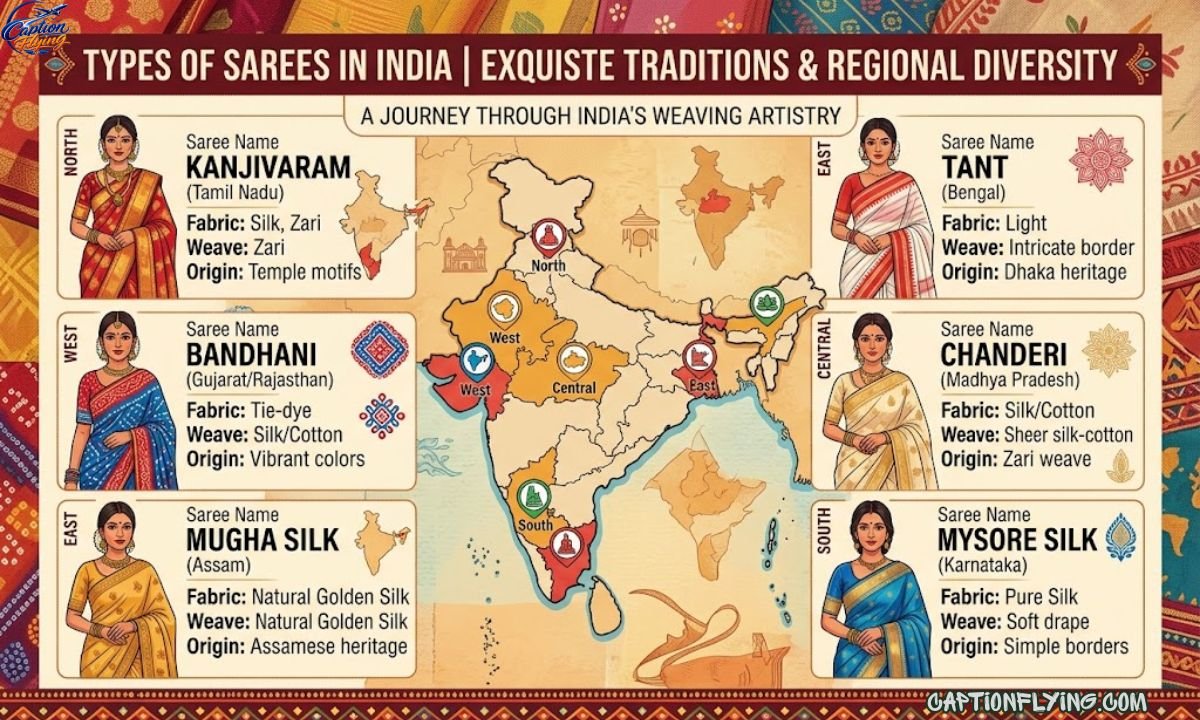
India is home to some of the most beautiful and diverse sarees in the world. From silk to cotton, every region has its own unique style. In this guide, we cover 100+ types of sarees in India, including traditional, famous, and stunning Indian saree types you will love.
Whether you want a bridal look or a simple daily wear style, there is a saree for every occasion. Popular choices like Banarasi, Kanjivaram, Chanderi, and Bandhani show India’s rich culture and craftsmanship. Read on to explore each saree type and find your perfect match.
List of Different Types of Sarees in India
India has a huge variety of sarees, each with its own fabric, weave, and story. Every state has a signature style that shows its local art and culture. This list will help you know them easily.
- Banarasi is known for rich gold zari work.
- Kanjivaram is a heavy silk saree from Tamil Nadu.
- Chanderi is light and shiny with a soft feel.
- Bandhani is a tie-dye saree from Gujarat and Rajasthan.
- Paithani is famous for its peacock motifs.
- Patola is a double ikat silk saree from Gujarat.
- Maheshwari mixes cotton and silk in a light weave.
- Tussar is a natural, earthy silk with a rich texture.
- Kasavu is a white and gold saree from Kerala.
- Baluchari has story scenes woven on the pallu.
- Kantha is a hand-stitched saree from Bengal.
- Pochampally is known for bold geometric ikat designs.
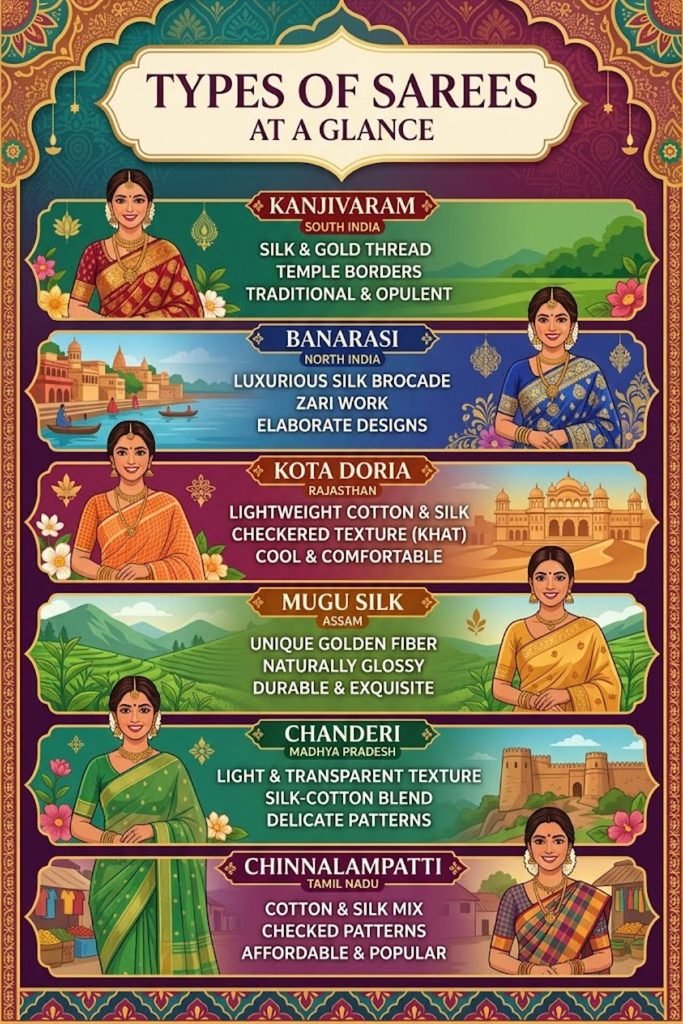
Types of Sarees at a Glance
Here is a quick look at the most loved saree types. This section gives you a fast idea before you read the details.
- Silk sarees are best for weddings and festivals.
- Cotton sarees are perfect for daily wear.
- Georgette sarees are light and easy to carry.
- Chiffon sarees have a soft, flowy look.
- Net sarees give a modern party look.
- Linen sarees are cool and great for summer.
- Organza sarees look crisp and elegant.
- Crepe sarees drape smoothly and resist wrinkles.
- Satin sarees have a glossy, rich finish.
- Velvet sarees suit winter weddings.
- Handloom sarees are made by skilled artisans.
- Printed sarees are budget-friendly and trendy.
Types of Sarees by Region & State
Each region of India creates sarees using local fabric, colors, and craft. Climate and culture shape every design. Sorting sarees by state makes it simple to find your favorite.
- Uttar Pradesh is known for Banarasi and Chikankari.
- Tamil Nadu is home to Kanjivaram and Kovai cotton.
- Gujarat is famous for Patola and Bandhani.
- West Bengal offers Tant, Baluchari, and Kantha.
- Maharashtra is known for Paithani and Nauvari.
- Kerala is famous for Kasavu sarees.
- Odisha creates Sambalpuri and Bomkai sarees.
- Assam is known for Mekhela Chador and Muga silk.
- Karnataka offers Mysore silk and Ilkal sarees.
- Andhra Pradesh is known for Venkatagiri and Uppada.
- Madhya Pradesh is famous for Chanderi and Maheshwari.
- Rajasthan is known for Leheriya and Kota Doria.
North Indian Sarees
North Indian sarees are rich, royal, and full of detail. They are often chosen for weddings and grand events. Zari, embroidery, and fine weaves define this region.
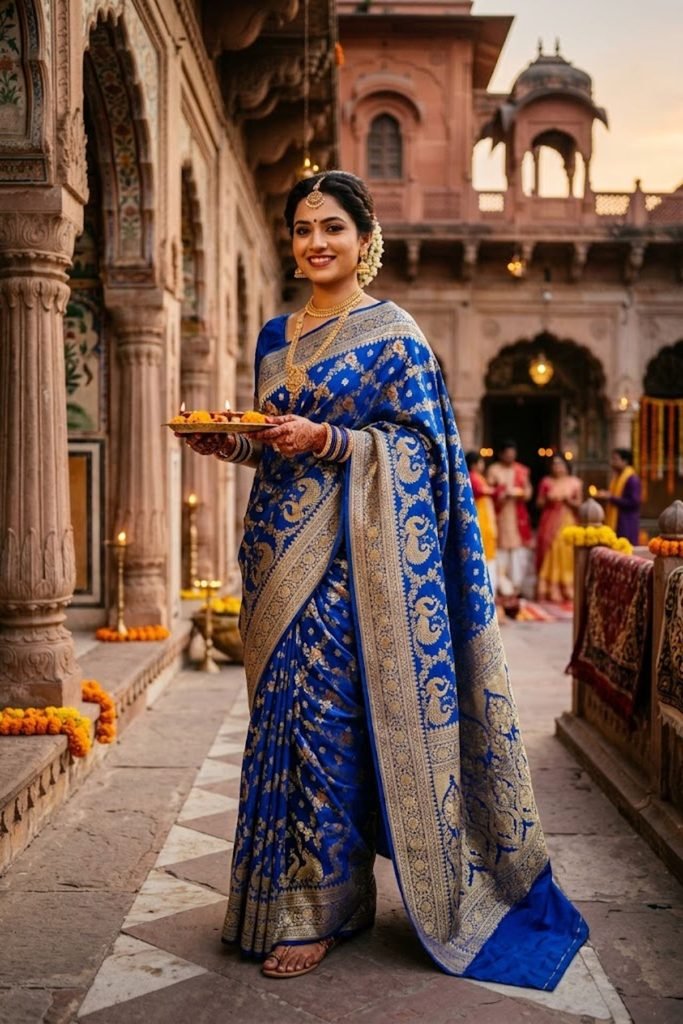
- Banarasi sarees are woven with gold and silver threads.
- Chikankari sarees have delicate white thread work.
- Phulkari sarees feature bright Punjabi floral embroidery.
- Kota Doria sarees are airy and check-patterned.
- Leheriya sarees have colorful wave-like stripes.
- Bandhej sarees are dotted tie-dye pieces.
- Tanchoi sarees are smooth silk with fine motifs.
- Jamdani sarees have sheer, floral woven designs.
- Kullu sarees are known for hill-style borders.
- Zardozi sarees are packed with heavy metallic embroidery.
- Gota Patti sarees use golden ribbon work.
- Brocade sarees have raised, luxurious patterns.
Types of Sarees in India with Names
Knowing saree names makes shopping and gifting easier. Each name points to a special weave or region. Here are some popular ones to remember.
- Banarasi means rich silk with zari.
- Kanjivaram means strong, temple-border silk.
- Paithani means silk with peacock and lotus motifs.
- Chanderi means light, sheer, and glossy.
- Pochampally means bold ikat patterns.
- Sambalpuri means tie-dye ikat from Odisha.
- Kasavu means cream cotton with gold border.
- Bomkai means Odisha weave with tribal motifs.
- Gadwal means cotton body with silk pallu.
- Venkatagiri means fine, light cotton from Andhra.
- Mysore silk means smooth, pure silk from Karnataka.
- Ilkal means a cotton-silk mix with a red border.
South Indian Sarees
South Indian sarees are famous for pure silk and temple-style borders. They are treasured for weddings and heirloom collections. The colors are deep, bold, and long-lasting.
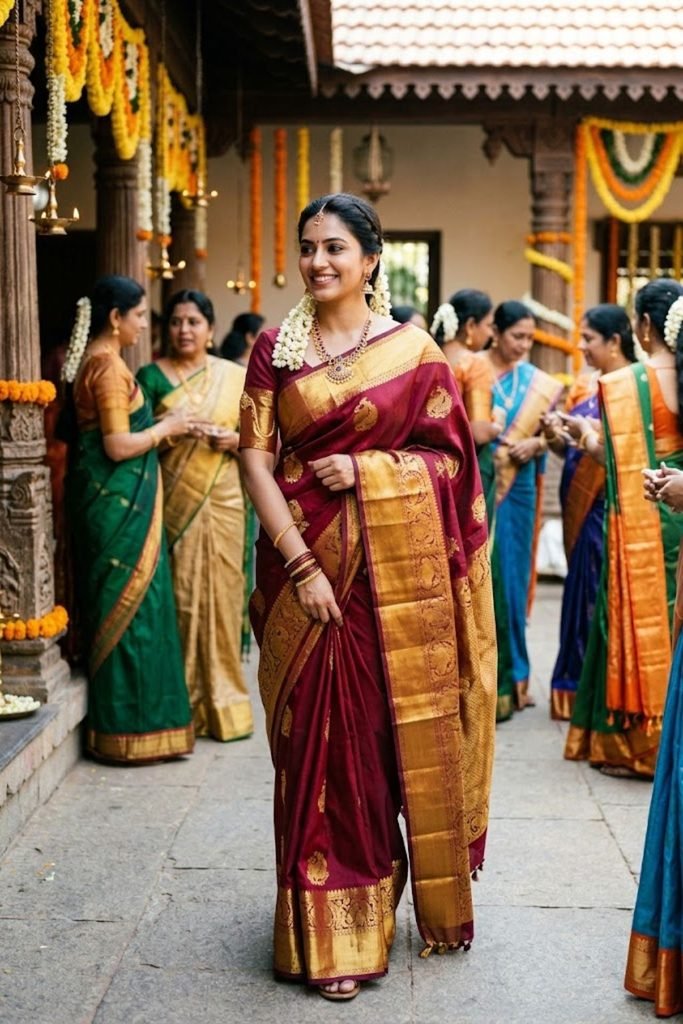
- Kanjivaram is the queen of South Indian silks.
- Mysore silk is soft with a subtle shine.
- Pochampally has geometric ikat patterns.
- Gadwal mixes cotton and silk beautifully.
- Kasavu is a simple white and gold classic.
- Uppada is a lightweight silk with fine work.
- Venkatagiri is a soft cotton for daily wear.
- Kovai cotton is a light and breathable weave.
- Chettinad cotton has bold checks and thick borders.
- Coimbatore sarees are budget-friendly and comfy.
- Dharmavaram silk has wide, heavy borders.
- Narayanpet sarees are simple cotton with rich borders.
Sarees from East Part of India
Eastern India is known for handloom art and soft cotton. The sarees here are light, graceful, and full of tradition. Bengal, Odisha, and Assam lead this craft.
- Tant is a light cotton saree from Bengal.
- Baluchari has epic scenes on the pallu.
- Kantha uses fine running stitches.
- Jamdani is a sheer muslin with woven motifs.
- Sambalpuri is a tie-dye ikat from Odisha.
- Bomkai has tribal-style embroidered designs.
- Khandua is a sacred silk saree of Odisha.
- Muga silk from Assam has a natural golden shine.
- Mekhela Chador is the traditional Assamese two-piece.
- Garad is a white silk saree with red borders.
- Dhakai is a fine muslin from Bengal.
- Tussar silk is earthy and long-lasting.
Sarees from West Part of India
Western India offers colorful and lively sarees. Gujarat and Maharashtra are famous for their bold weaves and dyes. These sarees are great for festive looks.
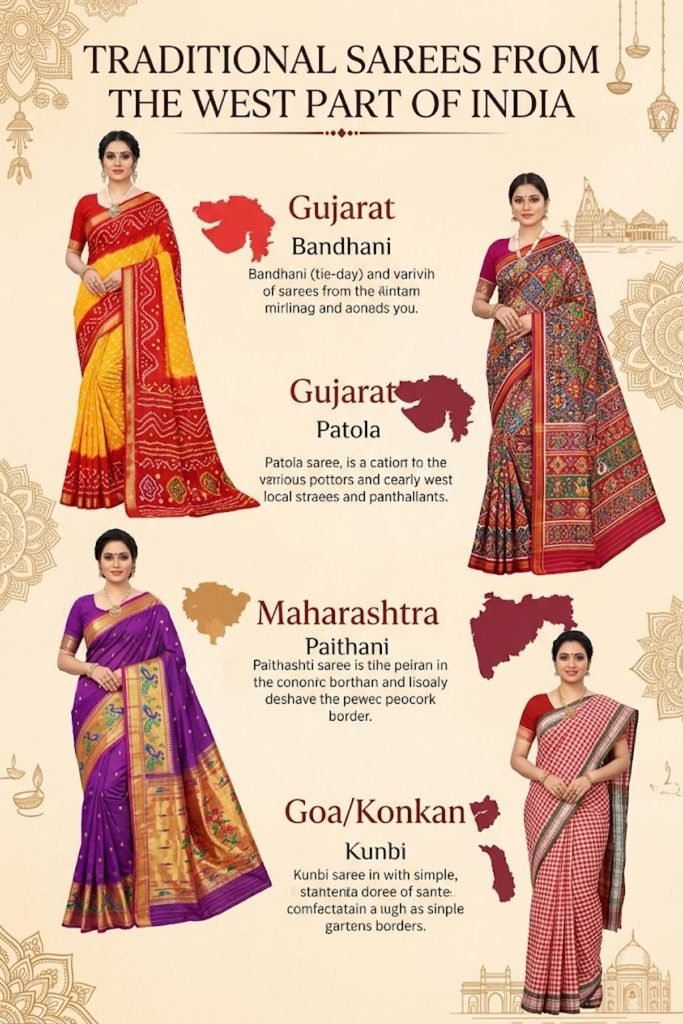
- Paithani is a silk saree with peacock designs.
- Patola is a double ikat, very rare, and costly.
- Bandhani is a bright tie-dye favorite.
- Nauvari is a nine-yard Maharashtrian saree.
- Ashavali is a Gujarati brocade silk.
- Gharchola is a traditional bridal saree of Gujarat.
- Kota Doria is a light saree from Rajasthan.
- Leheriya has cool, wavy stripes.
- Mashru is a silk-cotton blend from Gujarat.
- Himroo is a fine cotton-silk from Aurangabad.
- Kutch embroidered sarees have mirror work.
- Goan Kunbi sarees are simple checked cotton.
Lesser-Known Sarees From Various States
Many beautiful sarees are still not famous. They come from small towns and tribal areas. Buying them helps protect rare crafts.
- Kotpad is a natural-dyed saree from Odisha.
- Ikat from Nuapatna has fine traditional motifs.
- Sualkuchi silk is a rare Assamese weave.
- Eri silk is soft, warm, and peace silk.
- Kosa silk is a rustic silk from Chhattisgarh.
- Bhagalpuri silk is smooth and affordable.
- Maniabandhi is a unique Odisha ikat.
- Ilkal has a special tope teni pallu.
- Molakalmuru is a silk saree from Karnataka.
- Kasuti is known for detailed Karnataka embroidery.
- Puneri sarees are light cotton with rich borders.
- Chandrakala is a deep red-black Maharashtrian saree.
Modern and Contemporary Styles
New saree styles mix tradition with fashion. Designers now offer fresh drapes, fabrics, and cuts. They are ideal for parties and office wear.
- Pre-stitched sarees are ready to wear in seconds.
- Ruffle sarees have a trendy, playful look.
- Sequin sarees shine at night parties.
- Lehenga sarees blend a skirt and saree style.
- Belted sarees give a slim, stylish shape.
- Pant-style sarees are easy and comfy.
- Cape sarees offer a bold, modern twist.
- Jacket sarees look sharp and chic.
- Ombre sarees have soft color shading.
- Digital print sarees have fun, artistic designs.
- Fusion sarees mix old and new styles.
- Shapewear sarees offer a smooth, flattering fit.
Types of Sarees in India with Pictures
Pictures make it easier to spot different weaves and patterns. A visual guide helps you compare colors, borders, and pallus. It also helps when you shop online.
- Show a clear photo of each saree type.
- Add the saree name under every image.
- Highlight the border and pallu design.
- Use close-up shots for fabric texture.
- Group pictures by region or fabric.
- Add a short caption with the state name.
- Show one full drape view per saree.
- Compare two similar sarees side by side.
- Use bright, natural-light photos.
- Add alt text for better SEO.
- Keep image sizes small for fast loading.
- Add a photo gallery for easy browsing.
Central Indian Sarees
Central India is known for light, soft, and skillful weaves. Madhya Pradesh and Chhattisgarh lead this craft. These sarees are simple yet very graceful.
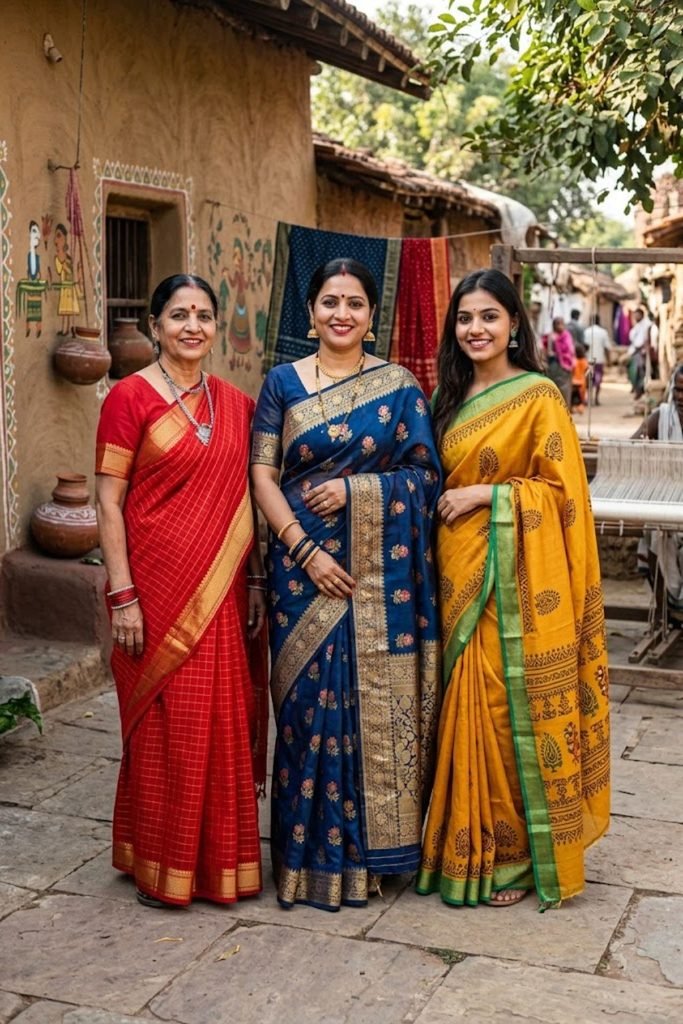
- Chanderi is sheer, light, and shiny.
- Maheshwari has reversible borders.
- Kosa silk is a natural, sturdy silk.
- Bagh print sarees use hand block prints.
- Tussar silk has a rich, earthy feel.
- Kosa Ghicha has a rough, natural texture.
- Bhopal silk is soft and elegant.
- Raigarh cotton is light and easy to wear.
- Dabu print sarees use mud-resist dyeing.
- Gond art sarees carry tribal painting motifs.
- Bastar sarees feature tribal weaving.
- Sironj sarees are fine cotton with bright borders.
How Many Types of Sarees Are There?
There are over 80 known types of sarees in India. Each is shaped by its region, fabric, and weaving method. New styles keep adding to this long list.
- India has more than 80 traditional saree types.
- Silk, cotton, and synthetic are the main fabric groups.
- Each state has 2 to 5 signature sarees.
- Handloom sarees make up a large share.
- Weaving styles include ikat, brocade, and jamdani.
- Printing styles include block, screen, and digital.
- Dyeing styles include bandhani and batik.
- Embroidery styles include chikan, zari, and kantha.
- Regional names vary for the same weave.
- Modern designers keep creating new styles.
- Many rare sarees are close to disappearing.
- Counting depends on how you group them.
Types of Sarees in India PDF
A PDF guide lets you save the saree list for later. It works offline and is easy to share. It is great for students, buyers, and designers.
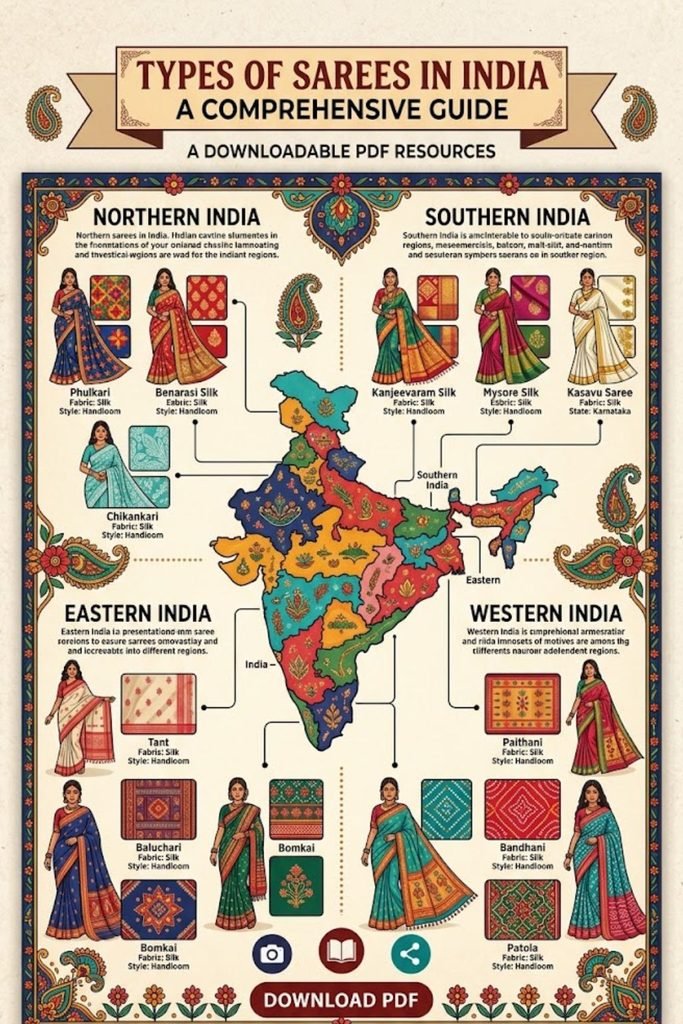
- Offer a free PDF download button.
- Include names, regions, and fabrics.
- Add clear pictures in the file.
- Keep the file size small.
- Use a clean, easy-to-read layout.
- Add a quick chart at a glance.
- Add a short guide on care tips.
- Include a buying guide section.
- Add draping steps for beginners.
- Keep the PDF mobile friendly.
- Update the file every year.
- Add your website link for credit.
Different Types of Saree Draping
Draping style can change the whole saree look. Every region has its own way to wear a saree. Learning a few styles helps you dress for any occasion.
- Nivi style is the most common and easy drape.
- Bengali style has box pleats and a wide pallu.
- Gujarati style has the pallu in front.
- Maharashtrian Nauvari is a nine-yard dhoti drape.
- Kerala style has a simple two-piece look.
- Kodagu style has pleats at the back.
- Madisar is a Tamil Brahmin nine-yard drape.
- Mermaid style gives a fitted, sleek shape.
- Butterfly style uses a pleated, flared pallu.
- Lehenga style drapes like a skirt.
- Dhoti style is a modern, easy drape.
- Belted style adds a waist accent.
Frequently Asked Questions
How many types of sarees are there in India?
There are over 80 traditional saree types across India.
Which is the most famous saree in India?
Banarasi and Kanjivaram are the most famous and loved sarees.
Which saree is best for weddings?
Silk sarees like Kanjivaram, Banarasi, and Paithani are best for weddings.
Which saree is best for daily wear?
Cotton sarees like Tant, Kovai, and Chanderi are best for daily wear.
Which saree is best for summer?
Light cotton, linen, and Kota Doria sarees keep you cool in summer.
What is the most common saree draping style?
Nivi style is the most common and easiest drape.
How can I identify a pure silk saree?
Look for a natural shine, a soft feel, and a silk mark tag.
Conclusion
India’s sarees show the country’s rich culture, skill, and history. From North to South and East to West, every region has its own special weave and style. Whether you love heavy silk or light cotton, there is a saree made just for you. Choose a saree that fits your occasion, budget, and comfort. Buying handloom sarees also helps support local weavers and keeps old crafts alive. Start exploring these beautiful saree types and add a piece of Indian tradition to your wardrobe.

Hi, I’m James, and welcome to CaptionFlying.com. I created this website to help you find simple, creative, and meaningful captions for your photos. Whether you need a funny, stylish, romantic, or short caption, you’ll find plenty of ideas here to make your social media posts more interesting and memorable.
2 thoughts on “100+ Types of Sarees in India | Traditional, Famous & Beautiful Indian Saree Types”